AI tools were used in the research, drafting, and editing of this article. All factual claims are sourced to primary documents and verified by the author.
A fact-checked look at taxes, water, power, and local control
TL;DR: Data-center projects along I-88 have added hundreds of millions in new taxable value – about $200 million in 2024 alone – helping local governments cut tax rates around 20 % while expanding services. Modern campuses use hybrid cooling that cuts water use ~80 %, and Illinois’ grid – increasingly powered by nuclear and renewables – keeps them largely carbon-free. Every project operates under local water caps, noise rules, and open-record laws that ensure community control.
The more technical deep dives on electricity and property taxes are linked below.
A Region in Transition
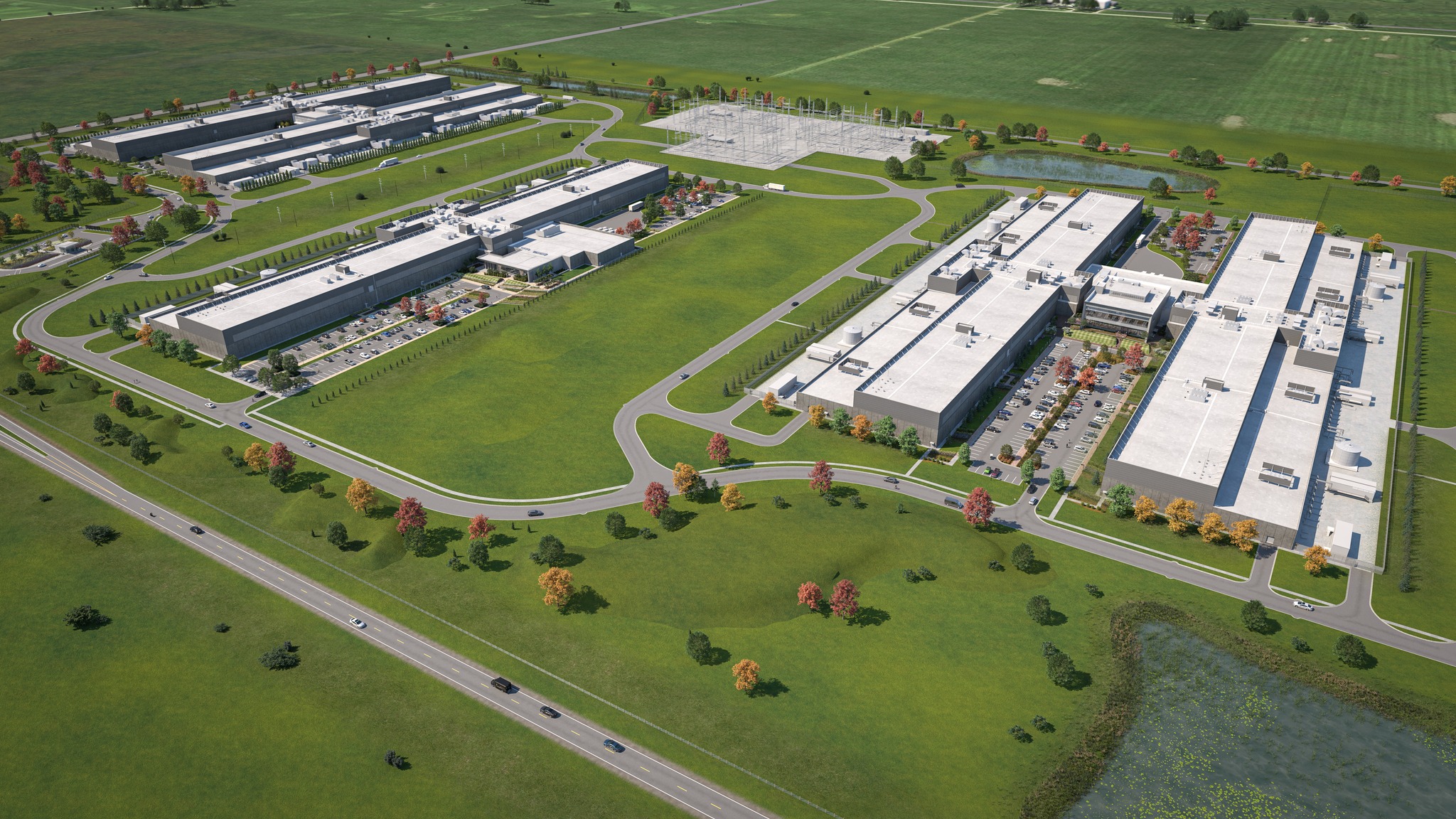
Cornfields along I-88 have rapidly transformed into billion-dollar data-center campuses. That pace of change has sparked valid questions: Will they drain our water? Overload the grid? Take over farmland or raise taxes?
Those are fair questions – and the public record already has the answers. Northern Illinois’ filings, maps, and grid documents reveal what’s really happening when digital infrastructure moves in.
What Growth Really Means
DeKalb’s experience offers the clearest picture. County parcel records show hundreds of millions of dollars in new equalized-assessed value (EAV) added since Meta began construction on Gurler Road [1][2]. In 2024 alone, more than $200 million was added to the rolls [2].
That growth allowed the city and park district to cut property-tax rates by roughly 20 % while still expanding services [5]. District 428 used its more substantial base to fund new early-childhood and special-education programs [6][7].
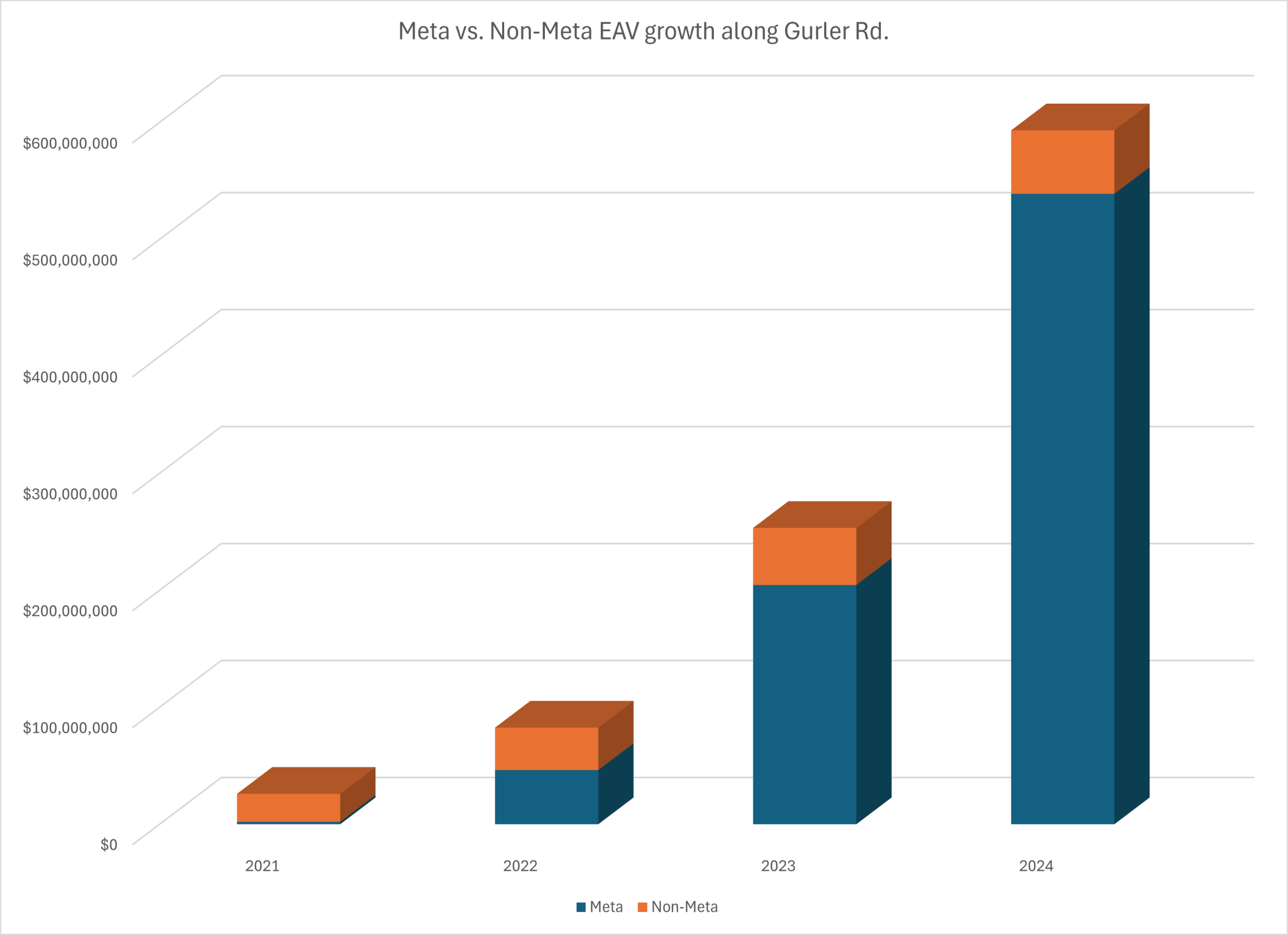
Even homes directly across from the Meta campus have seen an increase in assessed value, while 2024 tax bills fell, indicating that the project hasn’t depressed nearby property values [3][4].
A campus on the order of ~50 acres – like Batavia’s current proposal – can generate the property-tax revenue of an entire subdivision while producing only a fraction of the traffic and city-service demand [8]. When abatements expire, that value remains for decades – permanently strengthening local finances.
Enterprise-Zone transparency: DeKalb’s enterprise-zone agreements grant 20-year, 55 % property-tax abatements tied to large capital investment and local-jobs targets. Full revenues ramp up over time, but once the abatements phase out, the EAV stays on the rolls [38].
Water: Separating Facts from Fears
The biggest misconception is water use. Modern data centers rely on closed-loop and hybrid chillers that reuse the same water repeatedly, drawing only small top-offs during the hottest weather.
“These systems use ~80 % less water than older cooling towers.” – U.S. Department of Energy, 2024 [9]
Yorkville’s Project Cardinal, for example, is capped near 350,000 gpd across ~1,100 acres – roughly one-quarter the water per acre of a typical subdivision [10]. Batavia’s pending project is limited to only 1,000 gallons per day [8].
Some cities are even exploring non-potable water sources – reusing treated or reclaimed water that would otherwise be discharged – thereby eliminating nearly all impact on household supplies.
Meta, for its part, has pledged to be water-positive by 2030 – restoring more water to local watersheds than it consumes [11][12].
Quick Compare ▶ Water and Land Efficiency
Water use per acre
- Typical subdivision: ~4,000–5,000 gallons per day
- Modern data center: ≈ 1,000 gpd
- Bataviadata center: ≈ 1,000 gpd total for the Batavia project [8]
Land use for value
- Typical subdivision: ≈ 500 acres per $1 billion in taxable value
- Modern data center: ≈ 50 acres per $1 billion EAV
- Utility solar farm: ≈ 2,000 acres per $0.25–0.3 billion in assets [28][29]
Power: How the Grid Actually Works
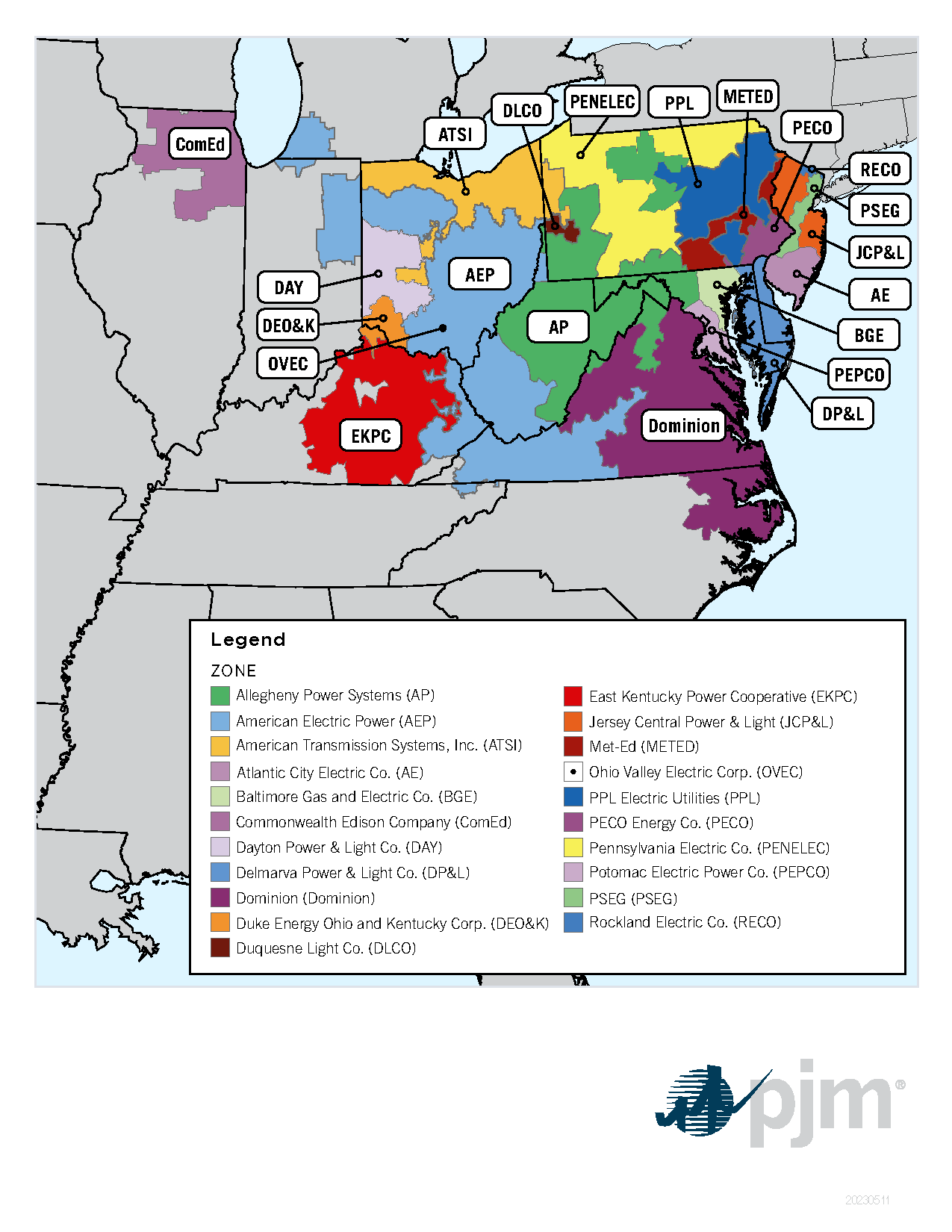
Northern Illinois isn’t an island; ComEd sits inside PJM’s 13-state grid stretching from Illinois to the East Coast [13]. PJM balances supply and demand every few minutes through its real-time market [14].
Adding a data center load here doesn’t destabilize the grid – it keeps jobs, the tax base, and infrastructure investment in our region, instead of somewhere else.
Large users also help finance reliable generation. Meta’s 20-year carbon-free agreement with Constellation keeps the Clinton nuclear plant operational [15], while Amazon and others have similar long-term clean energy contracts. The same nuclear facilities that serve data centers also stabilize wholesale prices for every Illinois ratepayer.
Illinois’ Clean and Reliable Grid Affordability Act now allows new nuclear development to begin in 2026 [16][17], reflecting confidence that steady baseload power complements renewables.
Even Naperville’s current proposal – still under review after public debate – shows how local oversight and state-level policy align to manage growth responsibly [18][19].
How Communities Manage Growth
Across Northern Illinois, cities are shaping development on their own terms:
- DeKalb has approved some projects and denied others – including a 2025 “boutique” data center and solar proposal on Peace Road that failed twice before the City Council [37].
- Batavia capped water use at 1,000 gallons per day (gpd) and oversees the project through its municipal utility [8].
- Yorkville & Plano require developers to fund all road, water, and utility extensions before annexation [32].
- Rochelle has hosted data centers for more than a decade under its Rate 163 tariff, using local generation to stabilize customer rates [20][21].
- Aurora enacted a temporary moratorium in Sept 2025 to update design and noise standards [22][23].
- Naperville already operates several small facilities quietly within its business parks [18][19].
Different paths, same outcome: clear expectations, transparent review, and measurable community benefit.
Farmland and Land Use
Illinois loses far more farmland to low-density residential sprawl than to any other type of development [27]. Modern data-center campuses are land-efficient – often only a few dozen acres per billion dollars of taxable value.
By comparison, solar facilities like the Burr Oak Solar Project occupy approximately 2,000 acres for a capacity of roughly 200 MW – 5 to 10 acres per MW [28][29]. Concentrating high-value, low-impact uses near existing transmission and fiber corridors helps preserve thousands of acres elsewhere for agriculture.
Transparency and Trust
Healthy skepticism makes communities stronger. Illinois’ Open Meetings and Freedom of Information Acts guarantee that local records are public [30][31]. Yorkville goes further, requiring an independent engineering review and continuous noise monitoring throughout each data center build [32][33].
Open processes like these keep the conversation anchored in verifiable facts rather than speculation.
Managing Construction and Operation
Construction brings trucks and dust – that’s why Illinois’ Construction General Permit (ILR10) and local ordinances regulate work hours, runoff, and haul routes [24].
Once operating, these facilities are tranquil. Backup generators are tested briefly each month under Illinois EPA permits that limit total runtime [25]. Landscaping, berms, and shielded lighting make them unobtrusive neighbors.
Shared Benefits and a Path Forward
Meta’s DeKalb campus alone has provided over $1 million in community grants to local schools and nonprofits [26]. Beyond those visible donations are quieter gains: modernized substations, stronger broadband routes, and more resilient municipal budgets.
Handled responsibly, data-center growth strengthens the very systems every resident relies on. Northern Illinois can either lead this balanced progress – or watch the investment migrate elsewhere. Let the data guide that choice.
Methods & Transparency
I utilize a range of AI and automation tools, in conjunction with my own research, to organize and verify complex public data – from DeKalb County tax rolls and DevNet parcel records to PJM TEAC maps and ComEd reliability filings. ChatGPT has been the primary workhorse for synthesis, but I also utilize Copilot, Gemini, Claude, and Grok to cross-check facts, refine tone, and develop Python-based tools for analysis. Grammarly keeps the writing clear – I use it for nearly everything I write, even texts.
Over the past several months, I’ve invested well over 100 hours reviewing, verifying, and refining this information. I have also permanently archived more than 100 key source documents in the Internet Archive’s Wayback Machine to ensure transparency and durability. The work is still ongoing as new filings and community feedback come in.
Every figure and citation is sourced from public records that you can verify independently. My goal is to make complex infrastructure and taxation topics accessible and understandable to everyone in the community. I’m just a local guy with a day job and a family, trying to make the public data we already have a little easier for everyone to understand.
If you’d like a deeper, fully-sourced explanation of why electric bills rose statewide, how PJM Interconnection pricing actually works, and what role data centers do and don’t play in local rates, see: Why Electric Bills Really Rose, and What It Means for Data Centers
For the full breakdown of how EAV growth, levy decisions, and data-center contributions combine to affect property tax bills in DeKalb County, see: How Meta’s Data Center Affected DeKalb County Property Taxes (2020–2024)
Sources & Archives (38 total)
(All permanently archived via web.archive.org)
This article is part of the Data Centers: The Public Record series. View all technical analysis →
1 – DeKalb Co. parcel 08-35-300-010 (2024) – Meta Ventus campus assessment. https://web.archive.org/web/20251102183338/https://dekalbil.devnetwedge.com/parcel/view/0835300010/2024
2 – City of DeKalb FY 2024 Tax Levy Memo (11-12-2024). https://web.archive.org/web/20241123035712/https://cityofdekalb.com/AgendaCenter/ViewFile/Agenda/_11122024-2614
3 – DeKalb parcel 11-032-000-66 (2021). https://web.archive.org/web/20251102224656/https://dekalbil.devnetwedge.com/parcel/view/1103200066/2021
4 – DeKalb parcel 11-032-000-66 (2024). https://web.archive.org/web/20251102224710/https://dekalbil.devnetwedge.com/parcel/view/1103200066/2024
5 – DeKalb Park District 2025 Tax Levy Estimate & Rate History. https://web.archive.org/web/20251102171237/https://dekalbparkdistrict.community.highbond.com/document/13a4a189-cf56-4454-938f-ba9ef5a28ade
6 – DeKalb CUSD 428 Early Learning Center Plan (2024). https://web.archive.org/web/20251103185226/https://go.boarddocs.com/il/dist428/Board.nsf/files/DMHQ9K683A17/$file/vision%20FOR28%20(2).pdf
7 – Shaw Local (10-29-2025). https://web.archive.org/web/20251103184920/https://www.shawlocal.com/daily-chronicle/2025/10/29/dekalb-school-district-428-moves-forward-without-referendum-on-early-learning-center-plans/
8 – City of Batavia Data Center Project (Hut 8). https://web.archive.org/web/20251102235655/https://il-batavia.civicplus.com/1248/City-of-Batavia-Data-Center-Project
9 – U.S. DOE (2024) Best Practice Guide for Data Center Design §5.3. https://web.archive.org/web/20250918212357/https://www.energy.gov/sites/default/files/2024-07/best-practice-guide-data-center-design_0.pdf
10 – Shaw Local (9-9-2025). https://web.archive.org/web/20251103141227/https://www.shawlocal.com/kendall-county-now/2025/09/09/yorkville-says-higher-water-bills-not-related-to-data-centers-but-higher-water-consumption-linked/
11 – Meta Sustainability Blog (2023) “What Does It Mean to Be Water-Positive.” https://web.archive.org/web/20251103011415/https://sustainability.atmeta.com/blog/2023/03/15/what-does-it-mean-to-be-water-positive/
12 – Meta Sustainability Blog (2023) “Our Journey to Water-Positive 2030.” https://web.archive.org/web/20251103011510/https://sustainability.atmeta.com/blog/2023/03/01/metas-edward-palmieri-shares-our-journey-to-achieve-water-positive-status-by-2030/
13 – PJM Territory Served / ComEd Zone Map (2024). https://web.archive.org/web/20250107193805/https://www.pjm.com/-/media/about-pjm/pjm-zones.ashx
14 – PJM Real-Time Energy Market Overview. https://web.archive.org/web/20251103191200/https://www.pjm.com/markets-and-operations/energy/real-time
15 – Constellation + Meta (2025) Clean-Energy Agreement. https://web.archive.org/web/20251015123245/https://www.constellationenergy.com/newsroom/2025/constellation-meta-sign-20-year-deal-for-clean-reliable-nuclear-energy-in-illinois.html
16 – Illinois Public Act 103-1079 (2025). https://web.archive.org/web/20251103193011/https://www.ilga.gov/legislation/publicacts/103/103-1079.htm
17 – Capitol News Illinois (10-2025). https://web.archive.org/web/20251103142417/https://capitolnewsillinois.com/news/lawmakers-ok-sweeping-energy-reform-package-that-governor-pledges-to-sign/
18 – NetSource Data Center Naperville. https://web.archive.org/web/20251022105043/https://www.netsource.com/web-hosting/chicago-datacenter/
19 – Daily Herald (10-17-2025). https://web.archive.org/web/20251102234708/https://www.dailyherald.com/20251017/news/developer-revises-data-center-plans-naperville-residents-still-concerned/
20 – City of Rochelle 2022 Utility Audit. https://web.archive.org/web/20251102173834/https://www.cityofrochelle.net/~documents/department-documents/finance/audits/22-final-audit-utilities-co-rochelle/?layout=file
21 – Rochelle Municipal Utilities Rate 163 Tariff. https://web.archive.org/web/20251104115335/https://www.rmu.net/wp-content/uploads/Rate-163.pdf
22 – City of Aurora Moratorium Page (2025). https://web.archive.org/web/20251102174548/https://www.aurora.il.us/Property-and-Business/Zoning-and-Planning/Data-Center-and-Warehouse-Moratorium
23 – City of Aurora Ordinance O25-064 (9-2025). https://web.archive.org/web/20251102174840/https://www.aurora.il.us/files/sharedassets/mainsite/v/1/environment/documents/o25-064.pdf
24 – Illinois EPA Construction General Permit (ILR10). https://web.archive.org/web/20251031193052/https://epa.illinois.gov/topics/forms/water-permits/storm-water/general-permits.html
25 – Illinois EPA Air Permit Generator Runtime Limits (2023). https://web.archive.org/web/20251103180322/https://epa.illinois.gov/content/dam/soi/en/web/epa/topics/environmental-justice/documents/ira/ira-analyses/031063AUJ%2023050030.pdf
26 – Meta Data Centers Community Grant Recipients 2021–2025. https://web.archive.org/web/20251102175450/https://datacenters.atmeta.com/2025-grant-recipients/
27 – farmdoc daily (8-2024) “Agricultural Land Lost to Development in the Midwest.” https://web.archive.org/web/20251102175731/https://farmdocdaily.illinois.edu/2024/08/agricultural-land-lost-to-development-in-the-midwest.html
28 – NREL (2013) Land-Use Requirements for Solar Power Plants in the U.S. https://web.archive.org/web/20251103180535/https://docs.nrel.gov/docs/fy13osti/56290.pdf
29 – Burr Oak Solar Project Overview. https://web.archive.org/web/20251102231740/https://burroaksolar.com/
30 – Illinois Open Meetings Act (5 ILCS 120). https://web.archive.org/web/20250918044223/https://www.ilga.gov/legislation/ilcs/ilcs3.asp?ActID=84&ChapterID=2
31 – Illinois Freedom of Information Act (5 ILCS 140). https://web.archive.org/web/20250918044314/https://www.ilga.gov/legislation/ilcs/ilcs3.asp?ActID=85&ChapterID=2
32 – City of Yorkville Development Standards Text Amendment. https://web.archive.org/web/20250612210415/https://www.yorkville.il.us/915/Data-Center-Development-Standards-Text-A
33 – City of Yorkville Project Steel Page (Noise Docs). https://web.archive.org/web/20251029220340/https://www.yorkville.il.us/905/Project-Steel-Data-Center-Campus-Annex-A
34 – City of Yorkville Council Packet (8-26-2025). https://web.archive.org/web/20251103181453/https://www.yorkville.il.us/ArchiveCenter/ViewFile/Item/6403
35 – City of Yorkville Council Packet (10-28-2025). https://web.archive.org/web/20251030025207/https://www.yorkville.il.us/ArchiveCenter/ViewFile/Item/6480
36 – NOAA / NCEI Illinois Billion-Dollar Disasters Summary (2024). https://web.archive.org/web/20250804110522/https://www.ncei.noaa.gov/access/billions/state-summary/IL
37 – Shaw Local (9-24-2025) “Vote on ‘Boutique’ DeKalb Data Center, Solar Development Fails Again.” https://web.archive.org/web/20250925140312/https://www.shawlocal.com/daily-chronicle/2025/09/24/vote-on-boutique-dekalb-data-center-solar-development-fails-again/
38 – DCEDC (2025) DeKalb County Enterprise Zone Incentives Summary. https://web.archive.org/web/20251104120025/https://dcedc.org/wp-content/uploads/2025/09/Enterprise-Zone-Incentives.pdf